Division 02
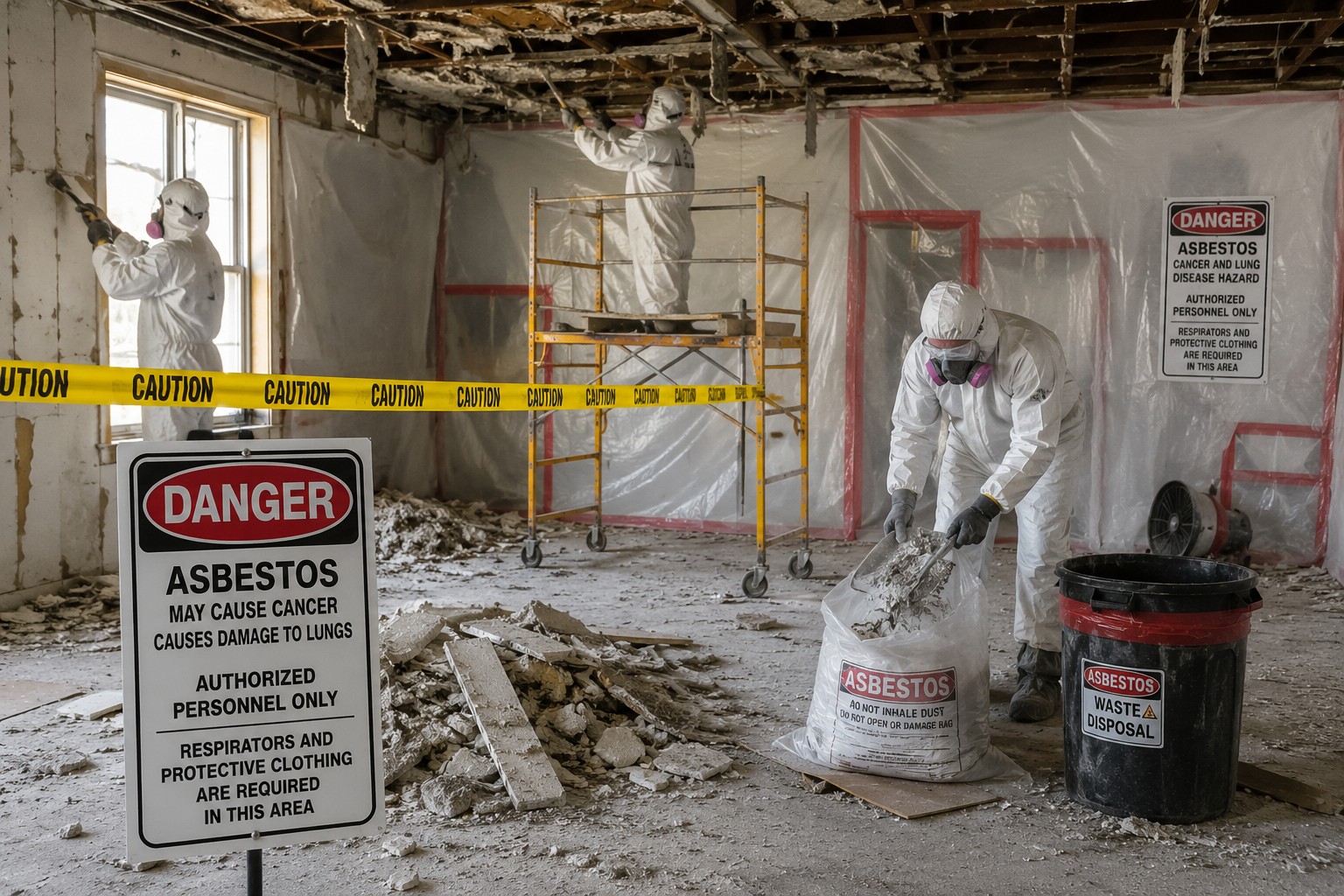
Demolition, abatement and existing-conditions quantities for renovation, fit-out and adaptive reuse work. Areas and volumes are measured off the demolition plans room by room. Asbestos, lead and mould scope is measured and priced as its own line rather than absorbed into the demolition rate, and disposal is carried by container and manifest rather than as a lump allowance.
Our project management ensures any doubts are clarified through RFIs before we go ahead with estimation, and we indicate the exclusions so you know exactly what our approach covers. Output is delivered in client-specific formats, so it is easier to work with our takeoffs when you are bidding the job.
Missed scope is the expensive failure in a takeoff — not a wrong number, but a line that was never picked up at all. The platform closes that gap in two passes: the AI reads everything, and an estimator checks what it found.
The agent parses the whole set — drawings, schedules, legends, general notes and the specification — instead of the sheets an estimator has time to open. Scope buried in a keynote or a spec section still surfaces.
Conditions that repeat across a set are where manual measurement drifts. Auto takeoff recognises a condition once and applies it everywhere it occurs, at the same calibration, so floor 9 is measured exactly like floor 2.
Revised sheets are compared against the set they replace, so a change buried in addendum three is flagged rather than quietly priced at the old quantity.
A trade estimator walks the agent output against the drawings line by line. The AI is fast and complete; a person makes the judgement calls — what the detail actually intends, what the spec really requires.
Where the drawings contradict themselves or leave something unstated, it goes on the RFI list instead of into a silent assumption. You decide the answer before it is priced.
The measurement overlay comes back with the deliverable, so any number can be traced to the sheet and detail it came from. You can audit the result rather than trust it.
Every existing conditions takeoff we deliver is measured in the BidcoreAI workspace — the same tool you can run yourself. Nothing is done in a spreadsheet you cannot audit or on a licence you do not own.
Drawings are calibrated per sheet and measured in one workspace, with areas, runs and counts captured against the sheet they came from.
Specifications, schedules and general notes are read alongside the drawings, so scope buried in the spec does not get missed.
Quantities drop straight into a priced estimate on your own cost library when you want the takeoff carried through to a number.
These are the project types that come up most often in the sets we are sent.
Building type not on the list? Send the set anyway — we quote on the drawings, not the category.
Redacted deliverables from completed Division 02 work. Ask for it in the form below and it comes back by email the same business day.
Every existing conditions quantity traced on the sheet it came from, so your own reviewer can check a number without re-measuring it.
The Excel or CSV worksheet the quantities land in, laid out the way an estimator works rather than as a flat dump.
The written basis of takeoff: what was included, what was left out, and the open questions worth issuing as an RFI.
Three fields and your drawings. An estimator confirms scope and comes back with a fixed quote within 4 business hours.